
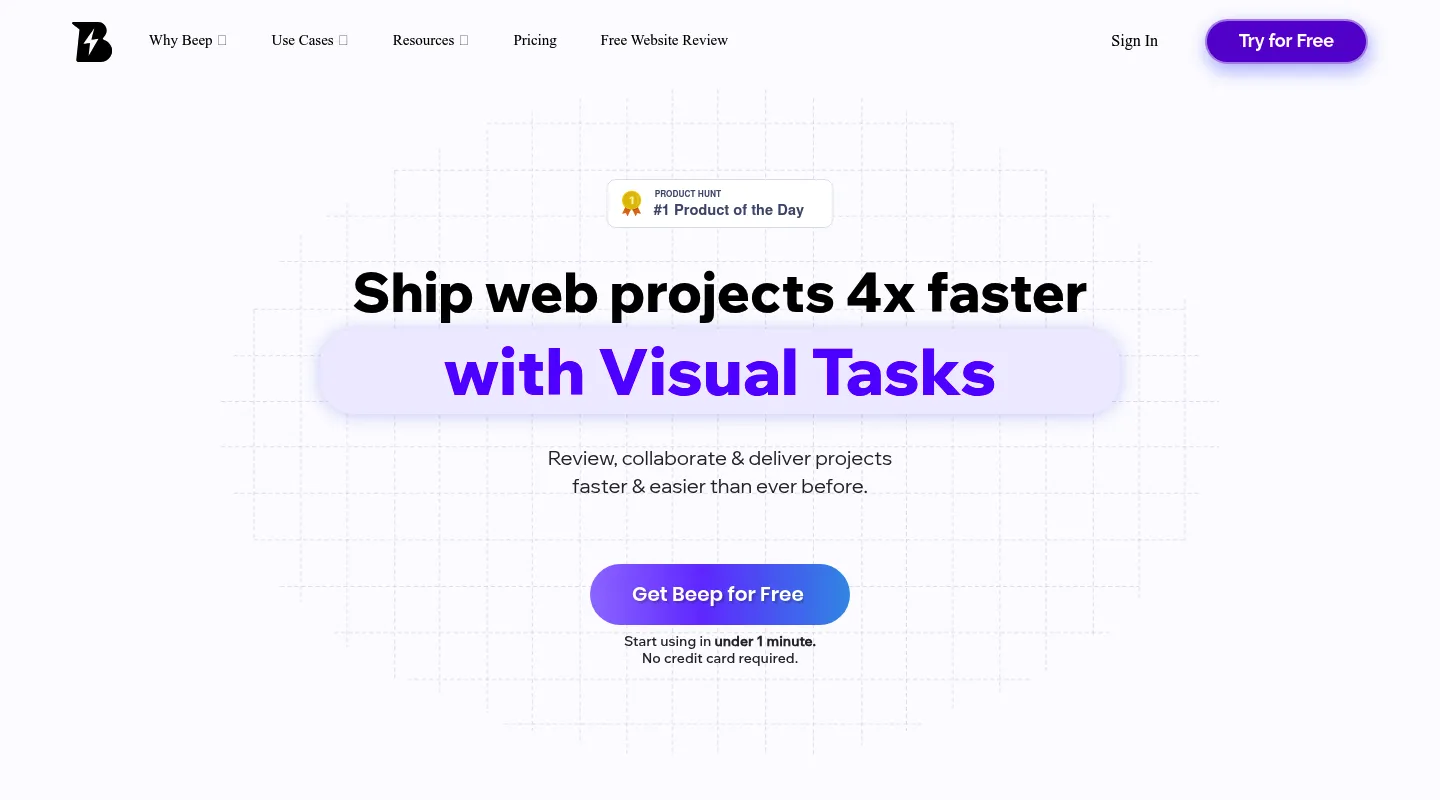
Huddlekit is the closest free Beep alternative when the browser extension is the sticking point. Reviewers open a link and comment directly on the page with nothing to install, and the free plan covers 3 team members with unlimited client guests. Beep is still the cheaper paid tool at around $9/month, so the trade is extension-free reviewing and responsive preview against a slightly lower paid floor.
Beep (justbeepit.com) keeps website feedback about as simple as it gets: install a browser extension, drop a comment on the page, and share it with your team. At around $9/month for the premium plan, it's one of the cheapest tools in the category. The catch is the extension itself. Every reviewer, clients included, has to install it before leaving a single comment, and there's no way to preview a layout across mobile, tablet, and desktop. Fine for a solo desktop workflow; less so once projects grow and non-technical clients are in the loop.
Most people shopping for a Beep alternative want one of two things: the same lightweight, low-cost review without asking everyone to install an extension, or a fuller tool that adds what Beep leaves out — responsive testing, CSS inspection, metadata, or real task management. This guide is sorted around that split, so you can jump to what fits your reason for leaving.
Why teams look for Beep alternatives
Beep is fast and cheap, but a few things consistently send teams looking:
- An extension for every reviewer: Beep collects feedback only through its browser extension, so every teammate and client installs it before commenting — friction that lands hardest on non-technical clients.
- No responsive preview: You annotate at whatever size your browser happens to be — no way to check a layout across mobile, tablet, and desktop.
- Built for desktop: The extension workflow targets desktop, not how a site behaves on smaller screens.
- No technical metadata: Comments don't carry browser, OS, or device details, so developers get less to work from.
- Limited CSS inspection: No built-in way to check typography, spacing, or color — that still means opening DevTools.
What to look for in a Beep alternative
Line up any replacement against the reasons Beep stopped fitting:
- Install or no install: Extension, script, or nothing at all — how much friction will your clients tolerate?
- Responsive testing: Can you review a site across mobile, tablet, and desktop, or only at one size?
- CSS inspection: Does it let designers check styles without opening DevTools?
- Client experience: Can a client comment straight from a link, or install something first?
- Pricing shape: Flat team pricing versus per-user billing changes your total as you grow, well beyond Beep's $9 floor.
Best Beep alternatives compared
1. Huddlekit — Best overall, extension-free replacement
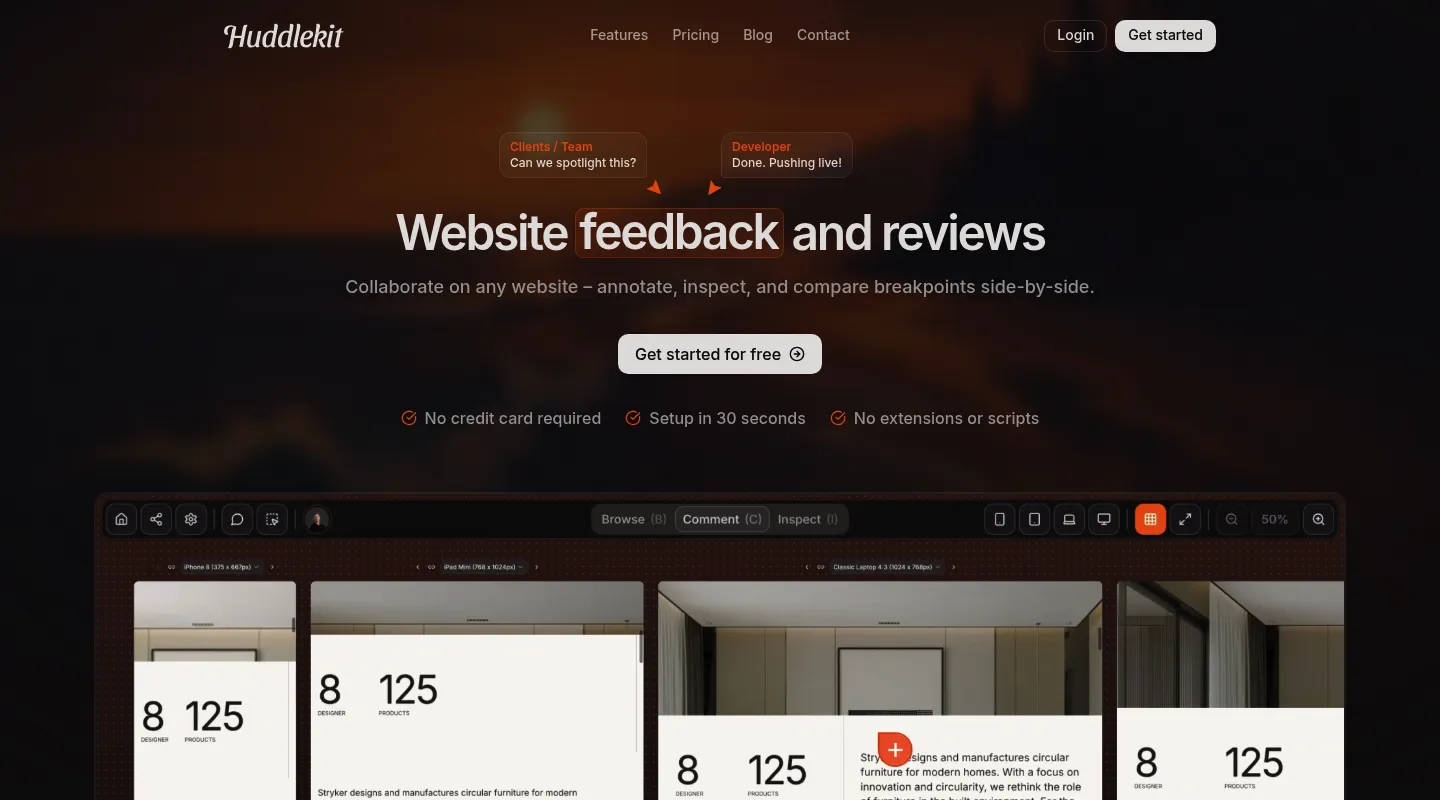
If the extension is the friction, or you've outgrown desktop-only annotation, Huddlekit covers what Beep does and what it doesn't — with nothing to install.
Key differences from Beep:
- Nothing to install: Website projects run from a URL — share a link and anyone comments immediately, clients included.
- Responsive preview built in: Review a site across mobile, tablet, and desktop breakpoints side by side — impossible in Beep.
- CSS inspection without DevTools: Check typography, spacing, and colors inline.
- Automatic debugging context: Browser, viewport, device type, and element metadata attach to every comment — the detail Beep skips.
- More than live sites: Collect feedback on documents, images, and video, not only websites.
- Built-in Kanban board: Turn comments into tracked tasks across every project.
Pricing: Free plan available (1 project, 3 team members). Paid plans run from $16/month billed yearly ($19 monthly) for Pro — 3 members, unlimited projects, and 5 GB storage — while Team adds 15 seats and 50 GB at $33/month yearly ($39 monthly). Every paid plan carries a 30-day money-back guarantee.
Pros:
- No extension or script to install
- Responsive testing and CSS inspection built in
- Captures the metadata Beep leaves out
- Free plan, then flat team pricing
- 30-day money-back guarantee
Cons:
- Newer tool with a smaller community
- Fewer third-party integrations than older tools
Verdict: The best fit when the extension is the sticking point, or when you've outgrown annotating one screen size at a time.
Best for: Teams who want Beep's simplicity without the extension, plus responsive testing and metadata as projects grow.
"I love this tool! The UI is super intuitive and clean, and the best part is being able to see all the breakpoints side by side." — Mikael, Product Designer @ Team Blue
Beep's simplicity, minus the extension.
2. Pastel — Best free, no-install option
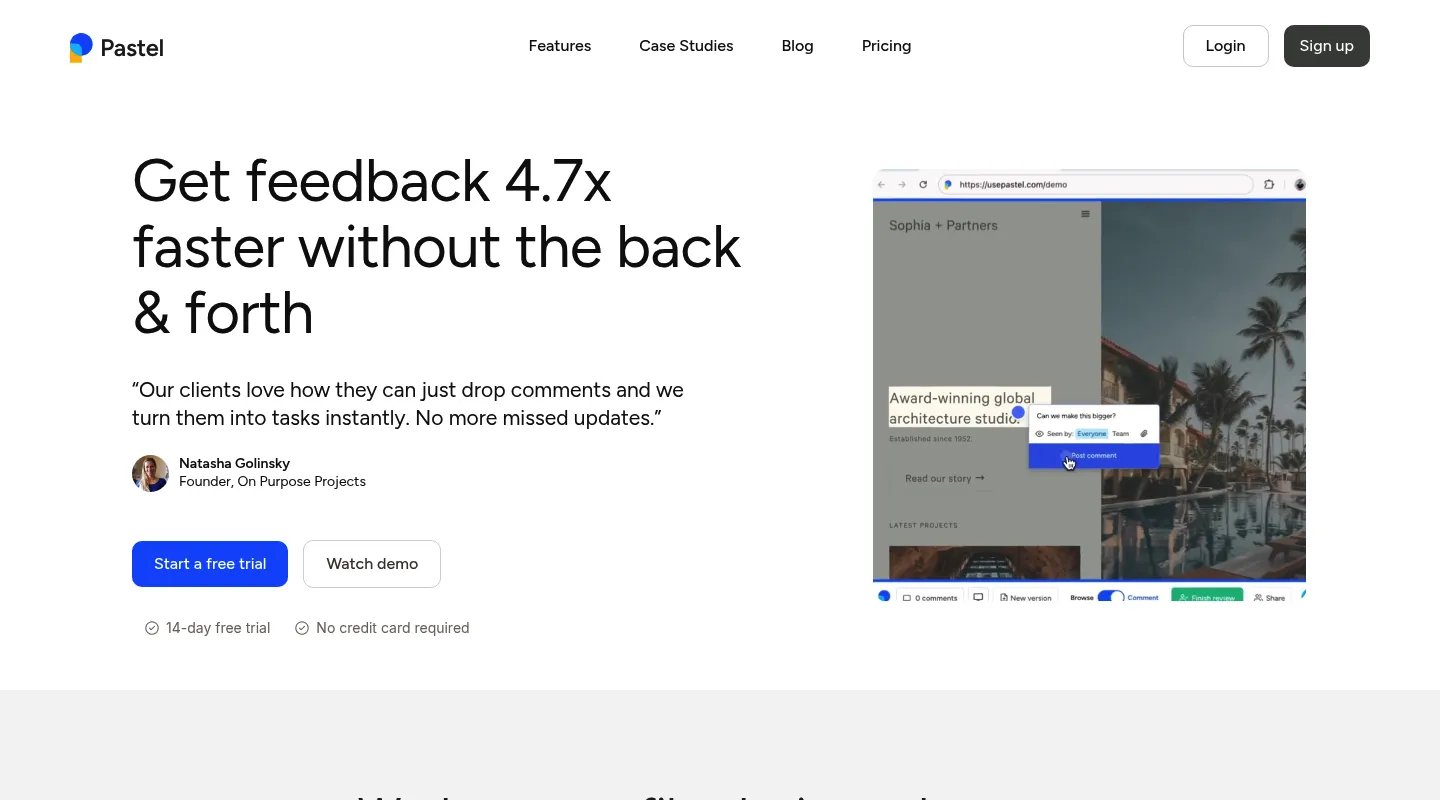
Pastel answers Beep's biggest ask directly — no install for anyone — with a free plan, so light use costs nothing.
Key differences from Beep:
- No extension, no script: Works entirely from a URL, so clients comment straight from a link.
- Free to start: A genuine free plan, where Beep's free tier is thin and still needs the extension.
- One active canvas: The free plan runs a single live review at a time; starting another means archiving the last.
- Simple by design: Core visual commenting, without responsive testing, CSS inspection, or metadata.
Pricing: Free plan (1 user, 1 active canvas). Pro is $35/month for 2 users; Team is $119/month for 5 users, then $24 per additional user.
Pros:
- No installation for anyone
- Free plan for occasional reviews
- Easy for non-technical clients
Cons:
- One active canvas at a time on the free plan
- Per-user pricing climbs fast ($119/month for 5 users)
- No responsive testing, CSS inspection, or metadata
Best for: Freelancers and small teams who want a free, install-free alternative and can live with one review at a time.
3. Ruttl — Best for live CSS editing
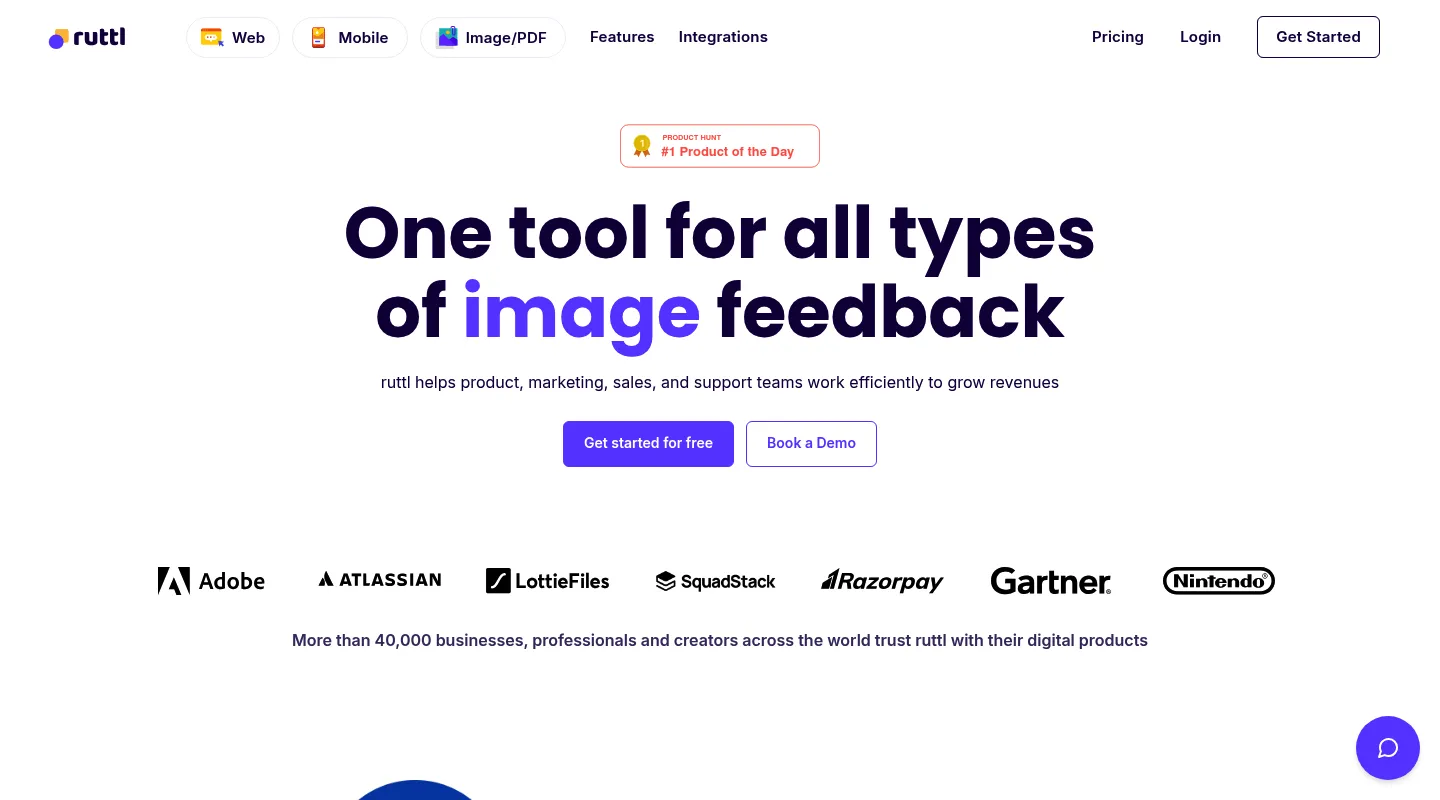
If you're leaving Beep for more capability rather than less friction, Ruttl adds something neither Beep nor most of this list has: live CSS editing on the page mid-review, exported as code.
Key differences from Beep:
- Live CSS editing: Adjust styles on the page during a review and export the code, well beyond Beep's annotation.
- Video comments: Record a walkthrough instead of typing every note.
- Trades the extension for a script: Ruttl needs a JavaScript snippet on each site — still an install, just a different kind.
- Per-user pricing from $10: Cheap per seat, but the total grows with every reviewer you add.
Pricing: From $10/month per user. No free plan.
Pros:
- Live CSS editing is genuinely uncommon
- Video comments included
- Low per-seat starting rate
Cons:
- Requires JavaScript installation
- Per-user pricing adds up with team size
- Reviewers report reliability bugs and slow support responses
Best for: Teams set on live CSS editing who'll accept a script install and per-seat pricing — check recent reviews first.
4. Markup.io — Best for dead-simple no-install review
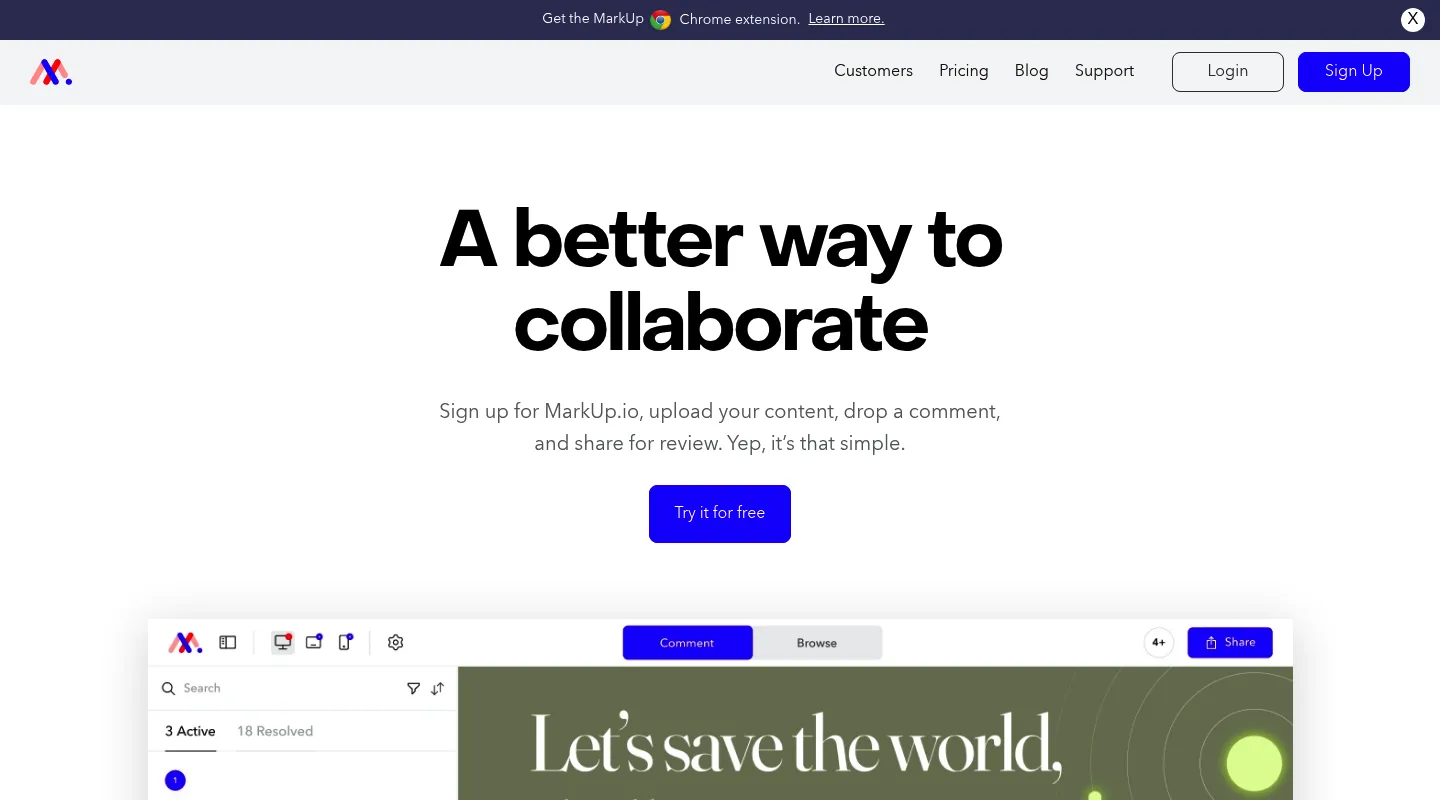
Markup.io matches Beep on simplicity — comment on a live site, share a link — but skips the extension, working straight from a URL. The trade-off is price: an early-2025 hike took its entry plan from $29 to $79/month and removed the free plan.
Key differences from Beep:
- No install at all: URL-based reviewing, so no extension and no script for anyone.
- No free plan since 2025: Markup dropped its free tier when it raised prices.
- Premium pricing: From $79/month, far above Beep's $9 and steep if simple commenting is all you need.
- No responsive testing or CSS inspection: Like Beep, it won't preview breakpoints or check styles.
Pricing: No free plan. From $79/month (raised from $29 in early 2025).
Pros:
- Genuinely no-install, Beep's simplicity without the extension
- Simple enough for any client
- Familiar, established workflow
Cons:
- $79/month entry point, far above Beep
- No free plan since the 2025 hike
- No responsive testing or CSS inspection
Best for: Teams that want Beep's simplicity without the extension and have the budget for premium no-install reviewing.
5. BugHerd — Best for turning feedback into tasks
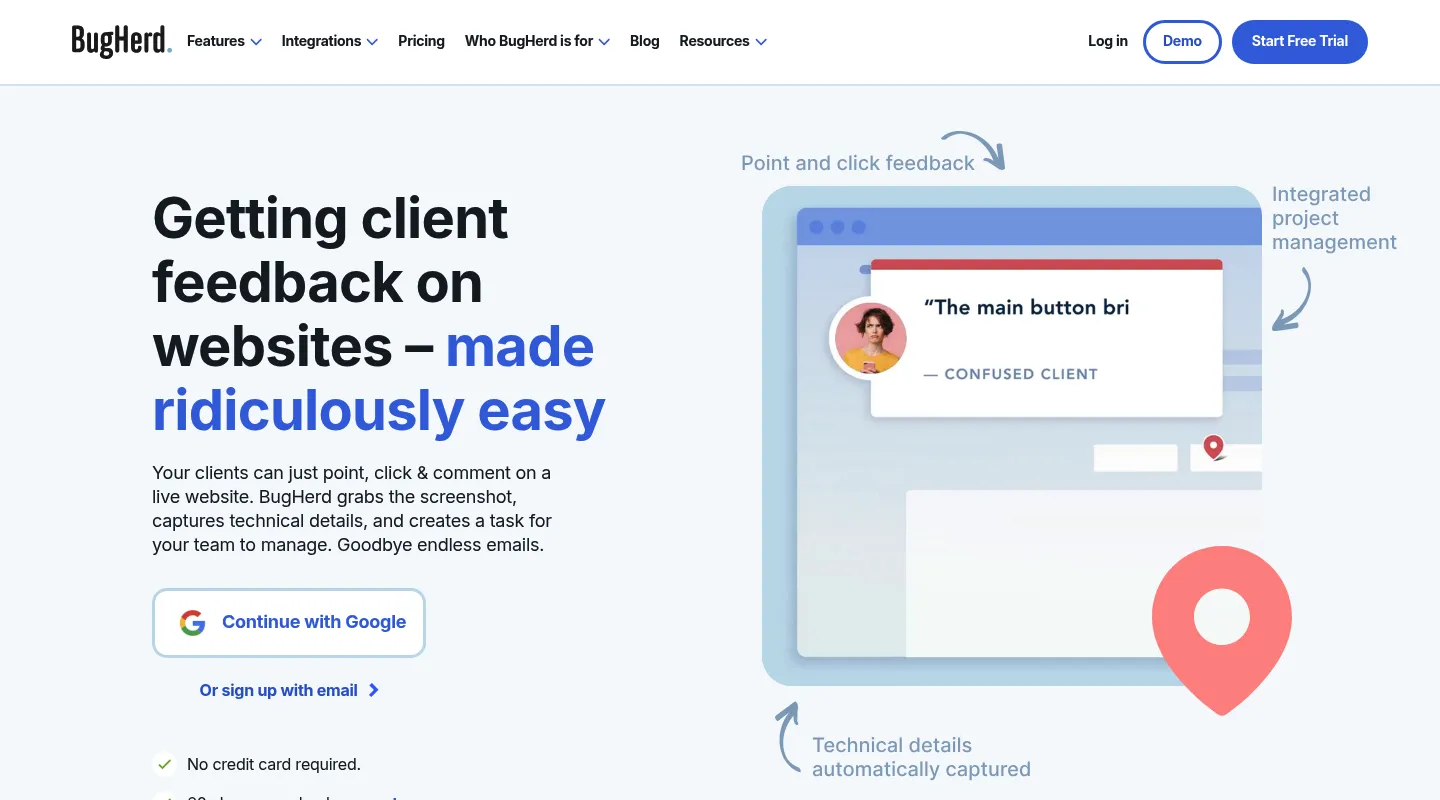
Beep includes a basic Kanban board, but BugHerd is built around task management: every pinned comment becomes a card, backed by deeper integrations and metadata than Beep offers.
Key differences from Beep:
- Task management at the center: Pinned comments become cards on a built-in Kanban — like Beep's board, but the core of a more established workflow.
- Technical metadata captured: Browser, OS, and screen details attach to each report, where Beep captures none.
- Deep two-way integrations: Syncs with Jira, Trello, Asana, and Slack.
- Trades the extension for a script: BugHerd needs a JavaScript snippet on each site — still an install, just a different one.
- Established since 2011: A long track record behind a dated interface.
Pricing: $50/month for 5 members ($42/month billed annually). No free plan, but there's a 14-day trial and a 60-day money-back guarantee.
Pros:
- Built-in task management with a proven track record
- Strong two-way integrations
- Captures technical metadata Beep doesn't
Cons:
- Requires a JavaScript script install
- No responsive testing or CSS inspection
- $50/month floor, well above Beep, with no free plan
Best for: Agencies and dev teams that want feedback and task tracking under one roof, wired into their existing stack.
When to stick with Beep
Beep still earns its place if:
- Your team and clients are happy to install the extension
- You work almost entirely on desktop and don't need responsive review
- You want the cheapest paid option and Beep's $9/month fits
- Its built-in Kanban board already covers your task tracking
When to switch — and to what
- You want no install for anyone → Huddlekit, Pastel, or Markup.io
- You need responsive testing and CSS inspection → Huddlekit
- You want a free, install-free plan → Pastel or Huddlekit
- You need technical metadata for developers → Huddlekit or BugHerd
- You want live CSS editing → Ruttl (check recent reviews first)
- You want feedback plus deep task management and integrations → BugHerd
- Clients keep struggling with the extension → Huddlekit or Pastel
Making the switch
Moving off Beep is quick, and because it's extension-based there's nothing to strip from your sites:
- Wrap up any active reviews in Beep if you need the record
- Set up your new workspace in the tool you've chosen
- Invite your team by email
- Share fresh review links with clients for upcoming work
- Have everyone uninstall the extension whenever they're ready
With Huddlekit there's nothing to install in the first place — paste a URL and clients can comment right away. Compare the plans to see what fits, or contact us with any questions.
Ready to lose the extension for good?
Frequently asked questions
Is Beep free?
Beep has a free plan with basic features, and its premium plan is $9/month — one of the cheapest around. But the free plan is limited, and every reviewer still installs the extension. Huddlekit also has a free plan (1 project, 3 team members) with nothing to install, and paid plans start at $16/month billed yearly with a 30-day money-back guarantee.
Does Beep work without the browser extension?
No. Beep collects feedback only through its extension, so every teammate and client installs it before commenting. If skipping that step matters — especially with non-technical clients — Huddlekit, Pastel, and Markup.io all work from a URL with nothing to install.
Can I review responsive layouts in Beep?
No. Beep has no responsive preview, so you annotate at whatever size your browser is set to. If checking a design across mobile, tablet, and desktop matters, Huddlekit has side-by-side breakpoint preview built in.
Can clients leave feedback on Beep without installing anything?
Beep offers guest access, but guests still install the extension to comment — the main friction point with non-technical clients. Huddlekit and Pastel let anyone comment straight from a shared link, no install and no account.
How do I migrate from Beep to Huddlekit?
Set up a Huddlekit workspace, invite your team, and share new review links for upcoming projects. Because Beep is extension-based, there are no scripts to remove from your sites — your team just uninstalls the extension whenever they're ready.
Conclusion
Beep's extension-and-annotate approach is quick and cheap for a small desktop team that doesn't mind the install. What wears thin is the extension itself, plus the missing responsive testing, CSS inspection, and metadata once projects get serious.
Match your replacement to why you're leaving: Pastel for a free, install-free start, Ruttl for live CSS editing, Markup.io for no-install simplicity when the budget allows, and BugHerd when feedback needs to become tracked tasks with integrations. For most teams, Huddlekit is the best all-round move — Beep's simplicity without the extension, plus responsive testing, CSS inspection, and metadata built in, on flat team pricing that starts at $16/month.
See Huddlekit's plans or reach out to talk through your workflow.
Want the wider field? Our guide to the best website annotation tools compares Beep against the full lineup.
